
Smooth, creamy and full of flavour, this healthy chickpea hummus follows the classic Middle Eastern method of chickpeas, tahini, lemon and garlic, but uses just one tablespoon of olive oil instead of the usual three or four. The secret is ice-cold water, which whips the hummus up light and fluffy without the extra oil. It is naturally vegan, gluten-free and free from preservatives, and makes a brilliant dip, spread or salad dressing.
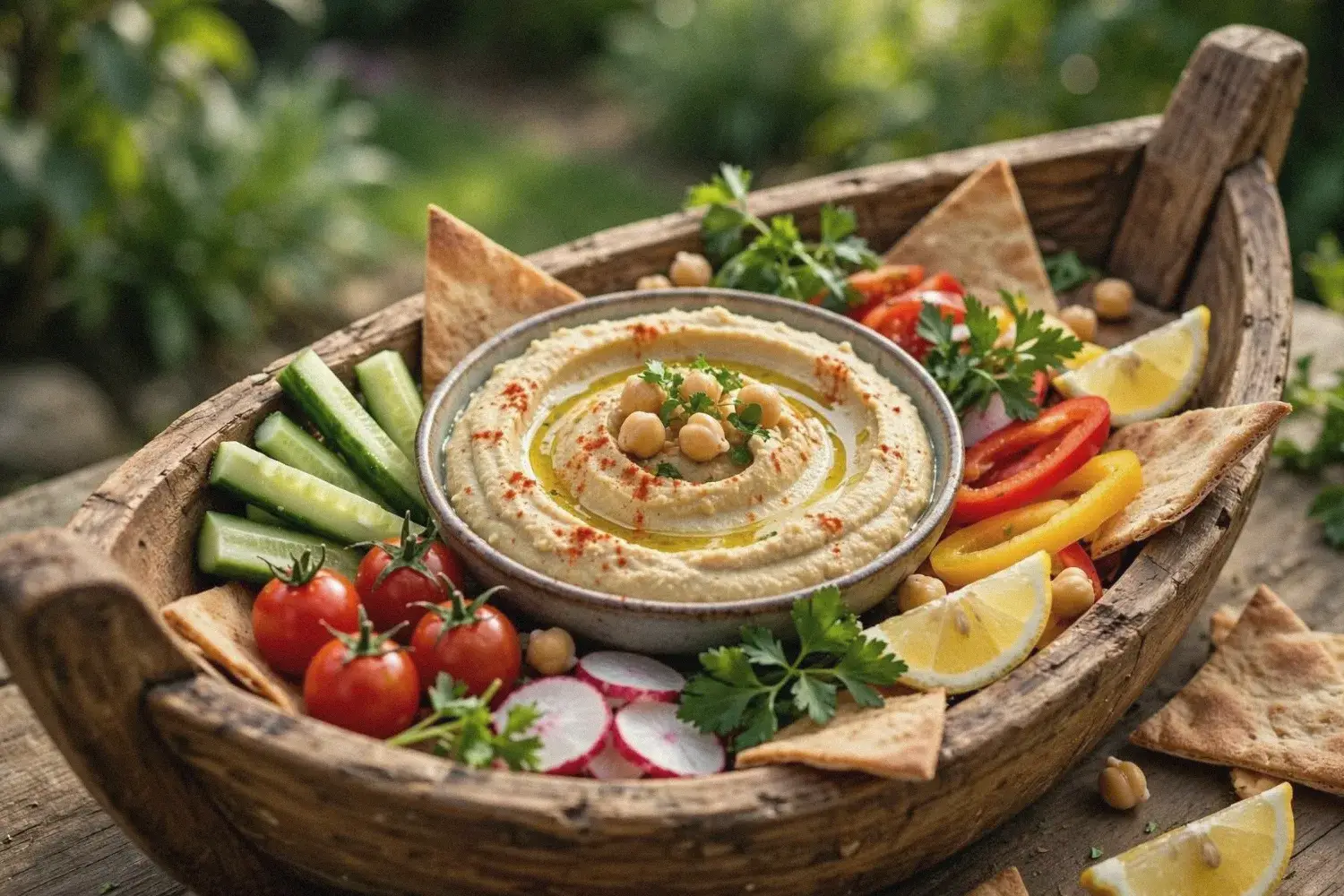
- Makes: 1 bowl, about 250g (around 8 servings of 2 tbsp)
- Prep time: 10 minutes
- Cook time: 45–60 minutes to boil dried chickpeas (15–20 minutes in a pressure cooker), or none if using tinned
- Soaking: overnight, for dried chickpeas
Ingredients
- 1 cup cooked chickpeas (about 165g), soaked overnight and boiled until very soft. Keep 5–6 whole chickpeas aside for garnish
- 1 tbsp tahini (sesame paste). Do not skip this, it gives hummus its authentic taste
- 1 tbsp extra virgin olive oil (instead of the usual 3–4 tbsp)
- 1 tbsp fresh lemon juice
- 1 small garlic clove
- ¼ tsp salt
- ¼ tsp roasted cumin powder
- 3–4 tbsp ice-cold water
- Paprika and fresh parsley, to garnish
Method
- Peel the chickpeas: While the boiled chickpeas are still warm, rub them gently between your hands or in a clean tea towel. The skins slip off easily. Pick them out and discard. This one step is what makes the hummus completely smooth.
- Blend: Add the peeled chickpeas, tahini, garlic, lemon juice, salt and cumin to a blender or food processor with 2 tbsp of the ice-cold water. Blend until it forms a thick paste, scraping down the sides once or twice.
- Make it light and creamy: Add the olive oil and blend again. Then add the remaining cold water a little at a time and blend for a full 2 minutes. Resist adding more oil. The long blend and the cold water turn it pale, fluffy and silky.
- Taste: Adjust with a pinch more salt or a squeeze of lemon if needed.
- Serve: Spoon into a bowl, make a swirl with the back of a spoon, drizzle with a few drops of olive oil, then sprinkle with paprika, chopped parsley and the reserved whole chickpeas.
Why Ice-Cold Water Works
Traditional hummus gets its creaminess from plenty of olive oil. Blending tahini with very cold water creates a light, whipped texture instead, so you can cut the oil right down without ending up with a heavy or dry dip. The longer blending time also breaks the chickpeas down more finely, giving you that smooth, restaurant-style finish.
Nutrition (Approximate, Per 2 tbsp / 30g)
- Calories: about 60 kcal
- Protein: about 2g
- Carbohydrates: about 6g (including around 1.5g fibre)
- Fat: about 3g
These figures are estimates based on standard ingredient values for the whole batch, including the garnish drizzle, and will vary with the brands you use and how much water you add. Because it uses only 1 tbsp of oil, this version is noticeably lighter in fat and calories than most classic hummus recipes.
How to Use It
- As a creamy spread in our healthy chicken shawarma wrap or any sandwich
- As a dip with warm oat chapati, pitta chips or fresh vegetable sticks
- Thinned with a little lemon juice and water as a dressing for a quinoa protein salad bowl
- As a quick, filling snack with cucumber, carrots and peppers
Storage
Store the hummus in an airtight container in the fridge and eat within 3–4 days. Always use a clean spoon, and a thin layer of olive oil on top helps stop it drying out. Hummus can also be frozen for up to a month. Thaw it overnight in the fridge and give it a good stir before serving.
Tips and Swaps
- Using tinned chickpeas: Drain and rinse a tin, then simmer the chickpeas in fresh water for 10 minutes before peeling. They soften further and blend more smoothly.
- Softer chickpeas, faster: A small pinch of bicarbonate of soda in the boiling water helps dried chickpeas soften and makes the skins easier to remove.
- Toast your cumin: Dry-roast cumin seeds in a pan for a minute, then grind them for a deeper, smokier flavour.
- Gluten-free serving: The hummus itself is gluten-free. Serve it with vegetable sticks or gluten-free crackers instead of pitta if you need to avoid gluten.
- Allergy note: Tahini is made from sesame, a common allergen.
Hungry for more? Explore our healthy recipes or pair this hummus with our seekh kebab dinner platter.
You might also like: For a light, oil-free starter, try our Lemongrass and Chia Clear Vegetable Soup or our creamy-without-cream Roasted Tomato Soup.
One Response